
Buyer guide
Red Lentil Buying Guide: Whole, Dehulled and Split
A red lentil enquiry should state the required product form and finish before quotations are compared. Whole lentils with their seed coat, dehulled whole lentils and split lentils require different descriptions and acceptance criteria.
For enquiries involving Russian red lentils or other proposed origins, define processing requirements and review lot documentation before comparing offers. Distinguish where the lentils were grown, processed, packed and sold.
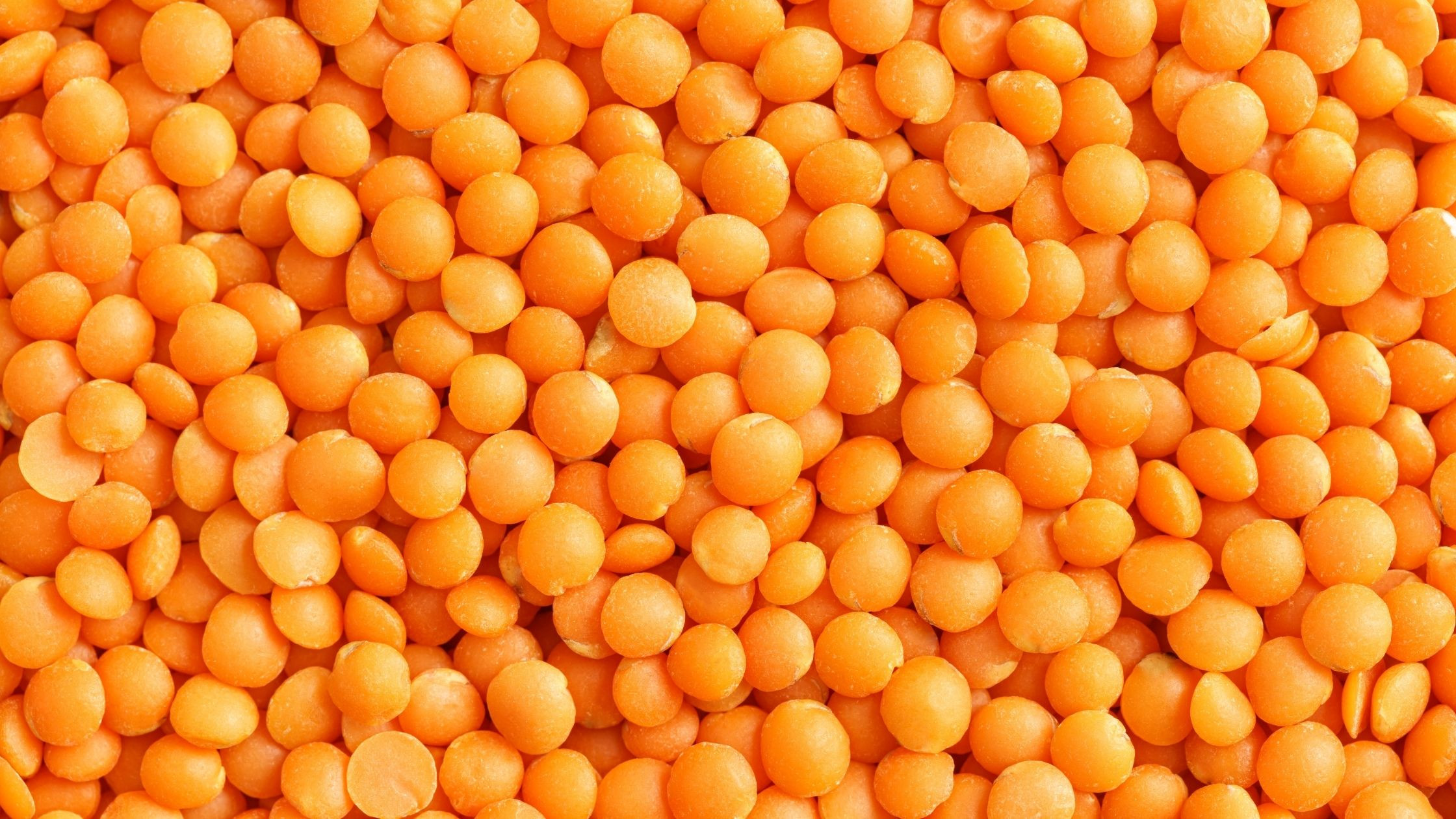
Start with product form
“Red” describes a lentil type; it does not mean the product has necessarily been split. The Canadian Grain Commission distinguishes lentil classes by cotyledon colour, separately from seed-coat characteristics. Canadian classifications do not automatically govern contracts for other origins.
Saskatchewan Pulse Growers describes red lentils sold as whole, dehulled and dehulled split seeds. Use the following purchasing categories to request a precise offer; the table does not indicate current Zenith Eclipse stock.
Dehulled whole red lentils may be described commercially as “footballs.” Confirm that meaning with the supplier’s written description and sample; the name alone does not define polishing, size, tolerances or a grade. Saskatchewan Pulse Growers also refers to split and football processed products in its discussion of market classes.
Begin with our Red Lentils product page and the relevant dehulled whole or split red lentil page. Red lentils are not simply green lentils that have been split. Buyers comparing whole green products should use the separate Green Lentils page and its size requirements.
| Requested product form | Description to confirm | Quality information needed |
|---|---|---|
| Whole with seed coat | Red lentil type, whole seeds, seed coat retained | Size, coat condition, damage, moisture, foreign material and unwanted splits |
| Dehulled whole | Seed coat removed; product intended to remain whole | Remaining coat, proportion of intact seeds, unwanted splits, broken pieces, fines and finish |
| Split | Dehulled product separated into cotyledons | Split uniformity, remaining whole seeds or coat, broken fragments, fines, colour and finish |
Reference: Canadian Grain Commission · Saskatchewan Pulse Growers · split and football processed products · Red Lentils product page · dehulled whole · split red lentil · Green Lentils page
Define the required finish
Replace “premium finish” with measurable criteria. Specify expected colour, permitted variation and the assessment method, supported by an agreed sample.
For dehulled whole products, distinguish intact seeds from unwanted splits and smaller broken pieces. For split products, define acceptable split material separately from fragments or fines. Agree how the fractions are separated and whether results are reported by weight. Clarify the treatment of remaining seed coat and incompletely dehulled seeds.
If size selection is required, state the method and size distribution. Ask whether the product is polished or unpolished and whether oil, another coating or any processing aid has been applied. Any relevant declaration should name the substance and be assessed against the buyer’s intended use and destination requirements. A shiny appearance is not a complete processing declaration.
Reference: Size-sorted red lentils · Custom-finish red lentils
Russian Red Lentils: Product Form, Origin and Processing
For an offer described as Russian red lentils, establish the declared origin and the exact product form first. Request the seller’s full identity, crop year, lot reference and available records supporting the origin claim. Then identify where cleaning, dehulling, splitting and packing were performed, where applicable.
Identify the seller, processor and packer separately. Their locations do not establish agricultural origin. Request accurate origin and processing documentation rather than inferring origin from an invoice address or loading point.
Match the sample and report to the proposed shipment lot. If processing follows sample approval, agree finished-product checks. General market information does not verify a seller or establish Zenith Eclipse availability.
Check quality against the finished product
Build the acceptance checklist around what will be delivered:
Where the buyer will process whole lentils further, arrange an appropriate trial against the buyer’s equipment and target finished product. Do not treat a trial yield as a guarantee for every batch. When buying finished splits, evaluate the delivered split product rather than relying only on a report for the unprocessed seed.
- Moisture: agree the maximum, test method, sampling stage and reporting date.
- Foreign material: define the categories and tolerances rather than relying on “cleaned.”
- Damaged or discoloured material: specify how defects are identified and measured.
- Remaining coat or husk: state the assessment basis for a dehulled product.
- Form uniformity: define whole seeds, splits, broken pieces and fines separately.
- Lot identity: link the sample, results, finished packing and shipment records.
- Destination requirements: identify relevant testing and documents with the buyer before confirming the order.
Compare quotations without losing the processing detail
Place product form, finish and quality requirements beside each quotation. A whole lentil offer and a dehulled split offer include different processing stages. Even two split offers may differ in fines, remaining coat, packaging or the documents included.
Compare Russian, Kazakhstan and other proposed origins only on confirmed, equivalent terms. No origin label establishes that a lot is universally better or cheaper. Record any exceptions, then confirm quantity, packaging, named delivery point, shipment period and payment conditions for the actual offer.
Specify pack material, net weight, marking and handling needs. Agree packaging and equipment checks, document responsibilities and receipt inspection. Discuss the proposed route through the appropriate logistics service; transport capacity and timing require individual confirmation.
Reference: logistics service
Before confirming a transaction
This article provides general purchasing information. References to a country, product type or transport option do not constitute an offer, confirmation of current availability or approval of a transaction. Any proposed business is subject to applicable legal, sanctions, banking and destination requirements.
Buyer questions
What is the difference between whole, dehulled whole and split red lentils?
Whole with coat retains the seed coat. Dehulled whole has the coat removed while retaining a whole form. Split product has been separated into cotyledons. Confirm the exact finish and allowed variation in the specification.
What should buyers confirm in a Russian red lentil offer?
Confirm origin, product form, seller identity, processing and packing information, crop year and lot reference. Check that the sample, quality results and shipment documents relate to the offered product.
How should buyers specify the required processing finish?
Define colour, size selection, remaining coat, whole or split uniformity, fragments and fines. Request polishing or coating declarations where relevant, and agree methods and acceptance criteria before approving the sample.
What information is needed for a bulk red lentil quotation?
Provide the product form, finish requirements, quantity, destination, quality specification, packaging and shipment period. Include delivery terms, company details and any reference sample.
Discuss your requirements
Request a Red Lentil Quote
Zenith Eclipse supports B2B commodity enquiries based on the required product specification, quantity, destination and delivery conditions. Any proposed origin, supplier, shipment arrangement and payment structure must be confirmed for the individual transaction. Send the required whole, dehulled whole or split form, finish, quantity and destination to request a quotation.