
Barley guides
Barley Quality Tests: Understanding Germination, Protein and Grain Size
Barley quality tests answer different questions. A living kernel may not germinate promptly, a large kernel does not prove malt performance, and a protein percentage needs a reporting basis. This guide explains how to interpret the evidence for malting, food and feed use. Acceptance criteria come from the agreed specification and intended use; the figures below are not universal limits.
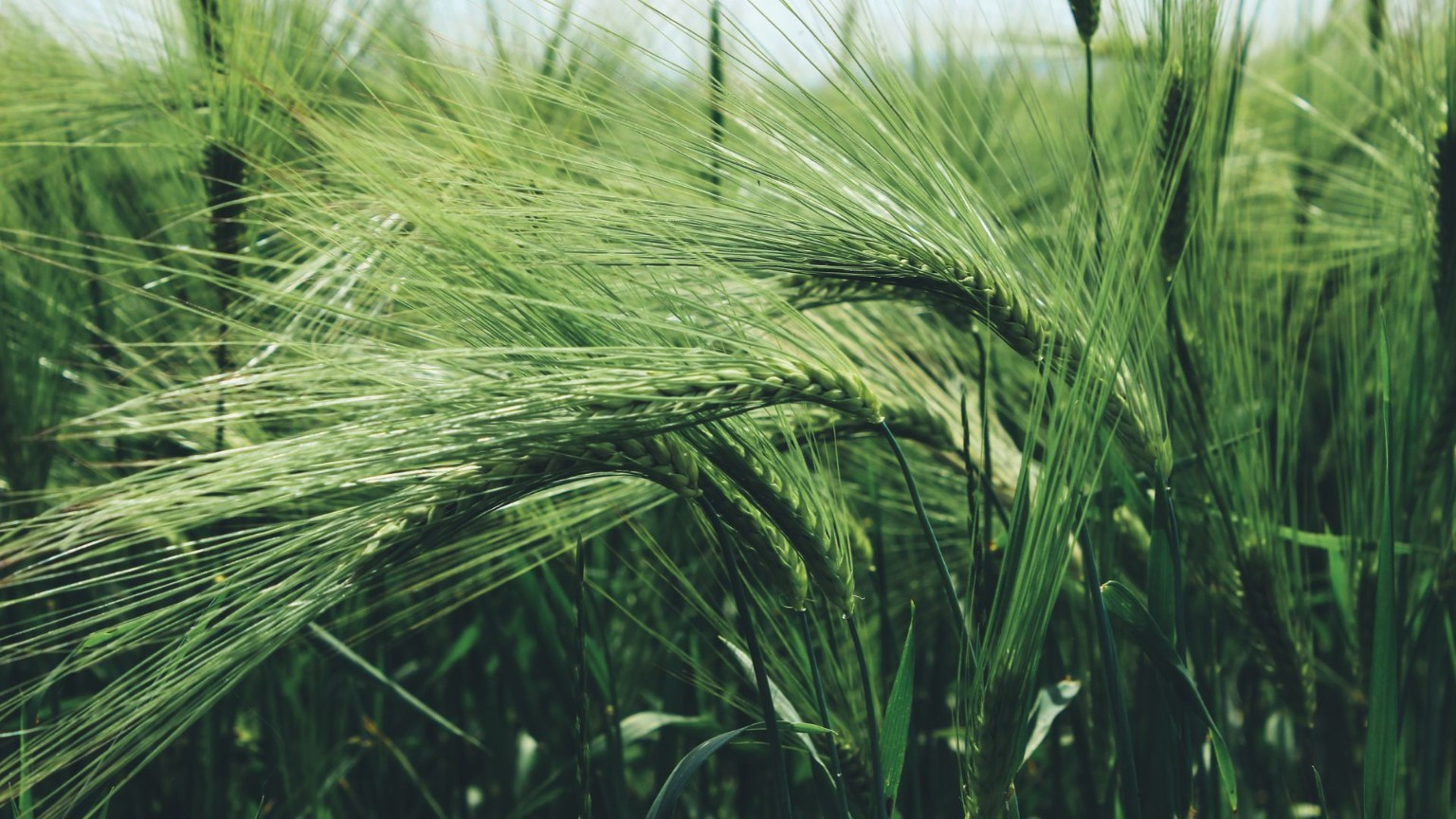
Start barley laboratory analysis with the material tested
Identify whether the sample is raw barley, cleaned barley, finished malt or wort—the liquid obtained by mashing malt. A laboratory can grind raw barley for analysis without turning it into malt. Results for different materials cannot be substituted simply because a parameter has the same name.
Record the lot, sampling date, cleaning or sieving before analysis, method and reporting basis. A result from a selected grain fraction may not represent the delivered bulk. Ask the laboratory to explain any difference between its sample preparation and the agreed acceptance procedure.
Technical references: CGC — Start barley laboratory analysis with the material tested · MAGB — Start barley laboratory analysis with the material tested
Barley germination energy and capacity: two different questions
Barley germination energy measures the proportion that germinates within a specified time under controlled conditions. The Canadian Grain Commission describes a 72-hour method with earlier counts. Barley germination capacity concerns the proportion capable of germinating; laboratories may assess this potential with viability methods such as tetrazolium staining. Ask which method was used: staining is not a timed growth test.
A high capacity with lower energy can indicate that viable grains are not ready to grow promptly, including possible dormancy. It does not diagnose the cause. Water sensitivity is assessed by comparing germination under different water conditions. Request the time, temperature, water regime and laboratory interpretation; do not average energy and capacity or treat one as a replacement for the other.
Technical references: CGC — Barley germination energy and capacity: two different questions · MAGB — Barley germination energy and capacity: two different questions
Read barley protein content with its moisture basis
Protein commonly derives from measured nitrogen; the CGC barley method uses nitrogen × 6.25. Confirm the factor and whether a calibrated near-infrared prediction or reference analysis was used. Dry-basis and as-received results describe different denominators and must be aligned before comparison.
Malting barley quality requires a balance: protein contributes to enzyme and yeast-nutrient needs, while increasing protein can reduce the starch share available for extract. Higher is not automatically better. Brewing, distilling, food processing and feed formulation have different objectives; the buyer must define the appropriate target and basis.
Technical references: CGC — Read barley protein content with its moisture basis · MAGB — Read barley protein content with its moisture basis
Barley moisture content: a result at a particular time
Moisture is the water fraction of the tested sample. Its meaning for storage depends on temperature, duration and grain condition. A delivery moisture result alone does not prove that the lot will remain stable throughout storage.
Confirm the method and sample preparation, then review drying and storage records where relevant. Drying damage may impair germination even after moisture is reduced. For malting lots, recheck viability when storage history or elapsed time warrants it; agree the timing with the receiver.
Technical references: CGC — Barley moisture content: a result at a particular time · MAGB — Barley moisture content: a result at a particular time · CGC — Barley moisture content: a result at a particular time
Barley kernel plumpness and barley screenings
Plumpness usually expresses the mass percentage retained above a specified sieve. Screenings describe the fraction removed under a stated screening procedure; small kernels, broken material and other components may be classified differently by the applicable method. Record aperture, slot shape, sieving procedure and whether the sample was already cleaned.
Plumpness and screenings are not necessarily complementary percentages: different sieves can leave an intermediate fraction. Uniform size helps control water uptake during malting; food processors may assess it alongside pearling yield. A plumpness figure from one sieve cannot be compared directly with a result from another.
Technical references: CGC — Barley kernel plumpness and barley screenings · MAGB — Barley kernel plumpness and barley screenings
What barley test weight can—and cannot—show
Test weight is the mass filling a standard volume under a defined procedure, often reported in kg/hL. It reflects bulk packing as well as grain characteristics. It is different from individual kernel density, sieve size and thousand-kernel weight.
Use it as a physical or grading measure where the specification requires it. A favourable test weight does not prove germination, malt extract, nutritional suitability or freedom from contaminants. Confirm the instrument, sample preparation and unit before comparing reports.
Technical references: CGC — What barley test weight can—and cannot—show
Separate raw-barley tests from malt and wort measurements
Germination, raw-grain protein, moisture and size help assess the barley entering the process. Micromalting then steeps, germinates and dries a sample under recorded conditions. Malt extract measures material obtained by a defined laboratory mash; diastatic power describes starch-degrading enzyme activity; friability assesses how readily malt crumbles.
Wort beta-glucan, viscosity and free amino nitrogen describe the resulting mash liquid. They are not raw-grain measurements. Grain beta-glucan and wort beta-glucan also refer to different materials and methods. Request the micromalting schedule, mash method, units and basis alongside the results. Good incoming barley values cannot guarantee the same finished malt under every processing regime.
Technical references: CGC — Separate raw-barley tests from malt and wort measurements · MAGB — Separate raw-barley tests from malt and wort measurements · CGC — Separate raw-barley tests from malt and wort measurements
An end-use decision table
Use this original table to choose the next technical question, not to assign a universal grade. Food and feed safety requirements remain separate from processing suitability.
| Intended use | Priority interpretation | Next question |
|---|---|---|
| Malting | Read energy and capacity together with protein basis, size distribution and kernel condition. | Does the maltster need a micromalting assessment before accepting this lot? |
| Food: pearling or milling | Assess cleanliness, damage, size uniformity and the processor’s yield or composition needs. Malting germination targets do not automatically apply. | Is a processing trial or a grain beta-glucan result required for the intended ingredient? |
| Feed | Assess nutrient composition, moisture, physical condition and safety against the ration and receiving specification. | Has the formulator reviewed the lot’s starch, fibre and protein? Failure of a malting criterion alone does not establish feed suitability. |
Technical references: Feedipedia — An end-use decision table · MAGB — An end-use decision table
Fictional report review: why a promising lot stays pending
The following report, lot and figures are invented for teaching. They describe no Zenith Eclipse stock, laboratory certificate, purchase offer or recommended acceptance limits.
The buyer should query the 7-percentage-point energy–capacity gap with the laboratory and maltster. The capacity result does not cancel the lower energy result, and the figures alone cannot establish dormancy or a safe storage period.
For this fictional sample, protein on dry basis is 10.5 × 100 ÷ (100 − 12.5) = 12.0%. The same sample therefore carries two valid protein percentages on different bases. The sieve figures leave 8% between the stated cuts; 4% screenings does not mean 96% plumpness.
The review remains pending until the buyer compares results with the actual specification, resolves the germination question and obtains any required malt, processing or safety evidence. Neither the test weight nor an untested malt row justifies declaring the lot suitable for malting, food or feed.
Before closing the technical review
- Confirm intended use, lot identity and representative sampling.
- Identify raw barley, cleaned fraction, malt or wort on every result.
- Keep germination energy, capacity, method and test date separate.
- Align protein basis and nitrogen conversion factor; retain the original values.
- Specify sieve apertures, retained/passing fractions and test-weight procedure.
- Resolve missing results and agree any retest or processing trial with the receiver.
- Record the specification version, applicable safety requirements and authorized acceptance decision.
Practical questions about barley testing
Can germination capacity replace germination energy?
No. Capacity addresses potential viability; energy records germination within specified conditions and time. If both are required, retain both results and ask the laboratory to explain a discrepancy.
Is a lower protein result always better for malting?
No. The maltster needs protein appropriate to the product and process. Compare equivalent moisture bases and methods, then apply the agreed target rather than selecting the lowest number.
Does 4% screenings mean 96% plump kernels?
Only if both are the exhaustive opposite fractions of the same defined sieve procedure. Different upper and lower cuts can leave an intermediate fraction, as the fictional example shows.
Can raw barley protein predict malt extract or diastatic power?
It helps frame the assessment but cannot supply those measured results. Request malt testing under a documented micromalting and analysis protocol when the buyer requires that evidence.
Can barley rejected for malting automatically be sold for feed?
No. The reason for rejection matters. A separate feed review must address composition, condition, contaminants and applicable requirements. A malting decision is not a feed-safety approval.
Turn the report into a clear barley enquiry
Send Zenith Eclipse the intended use, lot-linked report, specification and unresolved technical questions, together with quantity and destination. We can review the enquiry and coordinate the agreed evidence with the relevant supplier or inspection provider.