
Buyer guide
Flaxseed Meal vs Expeller Cake and Pellets for Feed Buyers
When comparing flaxseed meal, expeller cake and pellets, identify two things first: how the oil was removed and the physical form you will receive. These describe different characteristics of the same ingredient.
A mechanically extracted meal can be ground and then pelleted. A solvent-extracted meal can also be supplied as pellets. Neither the product nickname nor the pellet diameter tells a buyer the complete composition.
This guide explains how feed manufacturers, ingredient distributors and bulk importers can compare flaxseed products, check analytical results and prepare a clear request for quotation.
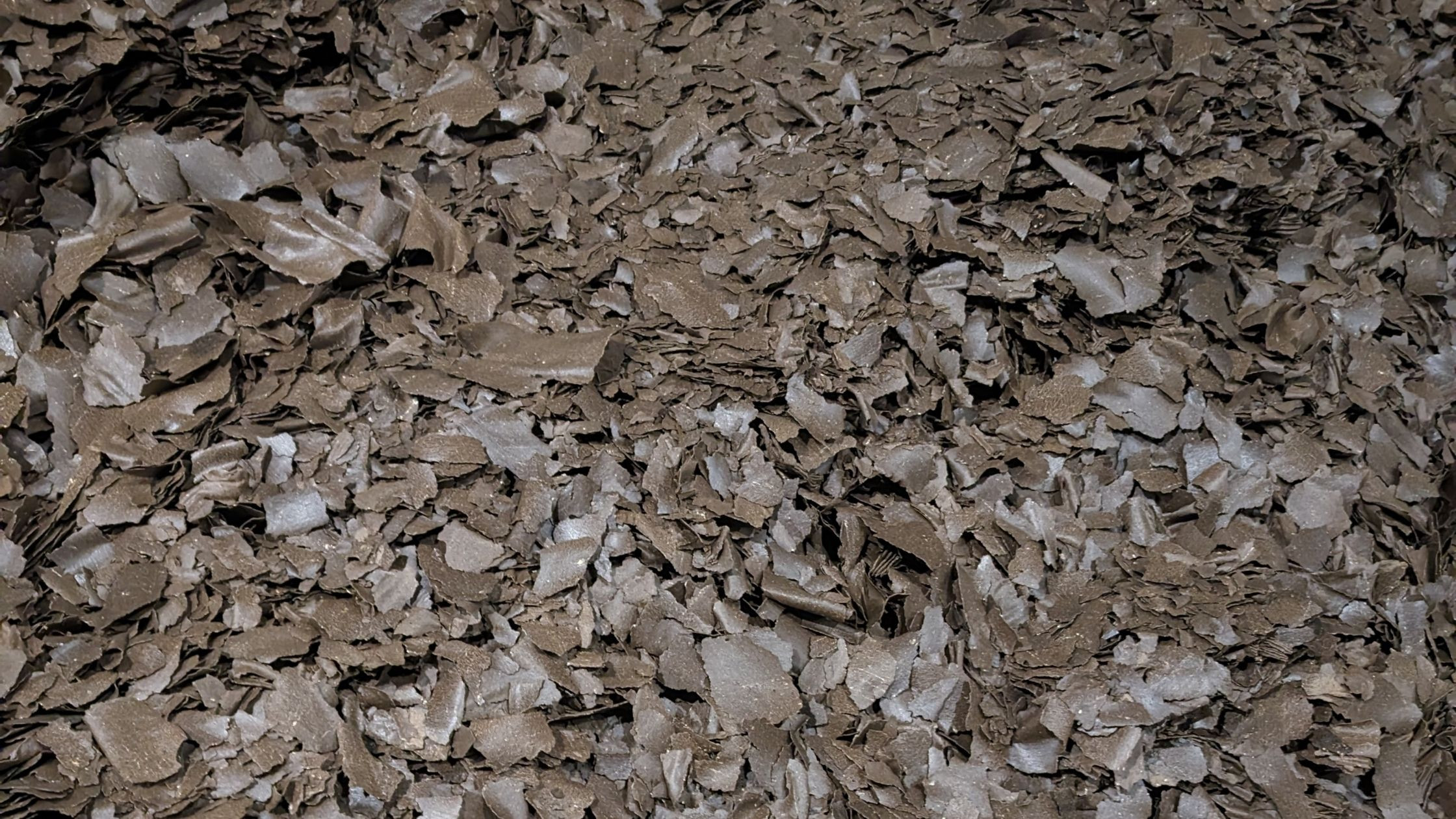
What flaxseed meal means in this guide
In the feed-industry context used here, flaxseed meal, often called linseed meal, is the material remaining after oil extraction from flaxseed, Linum usitatissimum.
However, the name is not used consistently across markets. Retail food products labelled “flaxseed meal” can contain ground whole flaxseed, with its oil retained. A manufacturer’s whole-flaxseed meal description illustrates that different usage.
Therefore, a purchase specification should say extracted flaxseed meal or ground whole flaxseed, as appropriate, and identify the intended feed or food use.
The Canadian Feed Ingredients Table separately identifies ground whole flaxseed, mechanically extracted meal and solvent-extracted meal. Its meal definitions also allow the physical form to be described as pelleted. This supports keeping processing route and supplied form separate in an enquiry.
Reference: manufacturer’s whole-flaxseed meal description · Canadian Feed Ingredients Table
How the commercial descriptions fit together
The following terms answer different buying questions. They should not be treated as five mutually exclusive nutritional grades.
Trade names such as cake, oilcake, expeller and meal can overlap. If a seller offers “expeller meal,” ask how it has been processed and sized. The name alone does not establish whether the shipment contains coarse cake or material already ground for blending.
| Description | What it identifies | What the buyer must still establish |
|---|---|---|
| Mechanically extracted meal | Oil removal by mechanical pressing | Residual oil, composition, processing history and supplied form |
| Solvent-extracted meal | Oil removal using a solvent process | Composition, desolventizing history and relevant residual-solvent criteria |
| Expeller or press cake | Mechanically pressed residue; often offered in coarse pieces | Actual piece size, fines and any subsequent grinding |
| Ground extracted meal | Particle-size preparation of an extracted meal | Underlying extraction route, sieve distribution and dust fraction |
| Pelleted extracted meal | Densified physical form | Underlying meal, final analysis, dimensions, fines and durability |
| Ground whole flaxseed | Whole seed reduced in size without an oil-extraction step | A separate specification and suitability for the intended use |
Mechanical and solvent extraction change the comparison
Mechanically extracted material generally retains more oil than more extensively extracted material. Removing oil changes the relative proportions of the remaining components, but it does not create a universal protein grade.
The seed, hull content, extraction conditions and moisture all matter. Buyers should compare protein, residual oil, fibre and moisture together, using consistent analytical methods and reporting bases.
The INRAE–CIRAD–AFZ feed tables illustrate why the reporting basis matters:
Sources: linseed meal with oil above 5% and linseed meal with oil below 5%.
These are published reference averages from different datasets, not Zenith Eclipse specifications, a controlled processing comparison or guaranteed shipment values. The categories are defined by oil content; they do not certify a particular extraction route. Here, the lower-oil category has a slightly higher protein average on dry matter, but a slightly lower average as fed.
For an actual purchase, request the process declaration and nominated lot analysis. Use the mechanically extracted meal or solvent-extracted meal page for the relevant commercial enquiry.
The numerical targets on those product pages are illustrative RFQ values. They become purchase requirements only when agreed for the specific transaction.
| Published reference category | Crude protein as fed | Crude protein on dry matter | Crude fat as fed |
|---|---|---|---|
| Linseed meal with oil above 5% | 32.3% | 35.4% | 9.8% |
| Linseed meal with oil below 5% | 32.0% | 36.4% | 3.4% |
Reference: linseed meal with oil above 5% · linseed meal with oil below 5% · mechanically extracted meal · solvent-extracted meal
A worked example of protein comparison
Consider two hypothetical offers: Offer A reports 30.0% crude protein as received at 12.0% moisture; Offer B reports 32.0% crude protein on dry matter at 10.0% moisture. The table below puts both on the same basis.
To convert an as-received result to dry matter, divide it by the dry-matter fraction. For Offer A, the calculation is 30.0 ÷ 0.88 = approximately 34.1%.
To convert a dry-matter result to as received, multiply it by the dry-matter fraction. For Offer B, 32.0 × 0.90 = 28.8%.
The apparently larger headline figure does not mean Offer B contains more crude protein per tonne as delivered. These hypothetical numbers demonstrate the calculation only; they are not quotations or product grades.
Protein concentration alone still does not establish feeding value. The formulator must assess the complete analytical profile and intended ration.
| Item | Offer A | Offer B |
|---|---|---|
| Stated crude protein | 30.0% as received | 32.0% on dry matter |
| Moisture | 12.0% | 10.0% |
| Protein converted to as received | 30.0% | 28.8% |
| Protein converted to dry matter | About 34.1% | 32.0% |
Expeller and press cake
For coarse material, agree maximum piece dimensions, fines and the receiving mill’s breaking or grinding capability. Ask for representative photographs and, where needed, a sample to assess handling.
Include the cost and capacity of any additional grinding when evaluating the offer. Material that is attractive per tonne may require extra preparation before it can enter the production line.
Zenith Eclipse’s flaxseed expeller and press cake page covers enquiries for coarse pressed material.
Reference: flaxseed expeller and press cake page
Ground extracted meal
Describe the grind with measurable sieve requirements. “Fine” and “standard” alone leave too much interpretation.
For example, “at least 95% passing a 1.0 mm sieve” describes one possible requirement. It is an illustrative screening target, not a universal standard. The sieve aperture, procedure and allowable dust fraction still need agreement.
A passing-sieve result does not describe the entire particle distribution. Check oversize and the smaller fraction that matters to the receiving system. See the fine and standard-ground meal specifications.
Reference: fine and standard-ground meal specifications
Pelleted extracted meal
Identify the underlying extraction route before specifying pellet dimensions. Request analysis of the final supplied pellets and declarations for any additives or processing aids.
Agree diameter, length, fines, durability testing and the point where acceptance will be assessed. Fines already present in a shipment and pellet resistance to breakage during a specified test are different measurements.
A durability result therefore does not replace a fines check at the contractual sampling point. The pelleted flaxseed meal page provides the relevant enquiry route.
Reference: pelleted flaxseed meal page
Define the safety tests precisely
Flaxseed contains cyanogenic glycosides capable of releasing hydrogen cyanide. The EFSA scientific assessment of cyanogenic glycosides discusses their presence in linseed and the importance of what an analytical method measures. Its human-food exposure values should not be used as animal-feed acceptance limits.
For a feed purchase, agree the required analytical scope with the receiving technical team. Clarify whether a report concerns free HCN, total cyanide or cyanogenic potential, and specify the units, expression of the result, moisture basis and method.
For solvent-extracted material, define any required residual-solvent test by analyte, method and acceptance criterion. A generic statement such as “solvent free” does not explain the testing performed.
Processing descriptions such as mechanically extracted, cold pressed or pelleted do not independently prove safety. Acceptance must reflect the supplied material, intended animal category and destination requirements. For example, the European Commission’s feed-contaminant framework illustrates why legal requirements must be checked separately from a commercial specification.
Reference: EFSA scientific assessment of cyanogenic glycosides · European Commission’s feed-contaminant framework
Match the certificate of analysis to the shipment
A useful certificate of analysis, or COA, must be connected to the material being purchased. Check:
An example COA supplied during negotiation helps explain the offered product. It does not establish the results of a later shipment.
The Codex Code of Practice on Good Animal Feeding supports scientifically sound sampling, suitable validated analytical methods and traceability throughout the feed chain.
- Identity: the description matches the extraction route and final form in the contract.
- Traceability: lot and sample identifiers connect to the goods and shipment documents.
- Sampling: the record identifies who sampled, when, where and under which procedure.
- Results: required parameters include their units, methods and reporting bases.
- Coverage: the report covers the tests agreed for release; omitted tests remain open questions.
- Physical acceptance: grind, cake dimensions or pellet fines are documented at the agreed point.
Compare the full delivered scope
Before comparing prices, put the offers on a consistent basis: product identity, analytical limits, physical form, quantity, packing, shipment period and delivery responsibilities.
Account for grinding or pelleting, testing, inspection, freight, unloading and any costs excluded from the offer. State the Incoterms rule, named place or port and version in the quotation. A port-delivery quotation should also identify which destination charges remain for the buyer.
For cake, discuss preparation at the mill. For fine meal, discuss containment and discharge. For pellets, specify fines acceptance and how transport-related deterioration will be assessed under the contract. These arrangements should align with the agreed delivery and risk terms.
Protection from contamination and moisture continues through storage and transport. Agree suitable packaging, transport-unit cleanliness, lot identification and handling conditions. Codex’s feed code addresses these responsibilities across the supply chain.
What to include in a flaxseed meal RFQ
Send one clear specification for each acceptable alternative. If both mechanical and solvent extraction are acceptable, describe them as separate options rather than allowing an undefined substitution.
Ask the supplier to identify any deviation from the requested specification in the written offer. This makes an alternative proposal easier to assess before purchase.
- Material and use: extracted flaxseed meal, botanical identity, intended feed use, animal category and destination.
- Processing: acceptable extraction route, treatment information and required declarations.
- Composition: protein, moisture, residual oil, fibre and other required parameters, with units, basis and methods.
- Physical form: coarse cake, loose ground meal or pellets, with the relevant size and fines criteria.
- Acceptance: sampling arrangements, COA requirements, safety tests and applicable destination criteria.
- Order: quantity per shipment, total programme volume if relevant, packaging and delivery window.
- Commercial scope: named delivery term and location, inspection arrangements, documents and payment requirements.
Buyer questions
Is flaxseed meal the same as linseed meal?
In feed trade, the names commonly refer to the same botanical source. Confirm the extraction route and supplied form because terminology alone is incomplete.
Is expeller cake different from mechanically extracted meal?
Both can originate from mechanical pressing. Cake often describes coarse material, while meal may have been ground. Commercial usage varies, so specify the actual form and particle requirements.
Can mechanically extracted meal be supplied as pellets?
Yes. Extraction route and physical form are separate characteristics. Availability, processing aids and final pellet specifications must be confirmed for the offered material.
Does a higher protein result always mean a better purchase?
No. First compare results on the same moisture basis. Then assess residual oil, fibre, the complete feed formulation, physical suitability and delivered cost.
Is ground flaxseed meal always extracted meal?
No. The name can also describe ground whole seed in retail food markets. State explicitly which material you need.
Is one inclusion rate suitable for every animal feed?
No. A qualified feed formulator should assess the analysed material within the intended species, life stage, complete ration and applicable feed requirements.
Discuss your requirements
Request a flaxseed meal quotation
Send Zenith Eclipse the required extraction route, physical form, analytical limits, quantity, packaging, destination and shipment window.