
Buyer guide
Sunflower Meal Pellets: Separate Durability from Delivery Fines
A pellet durability result and a delivery-fines result describe different things. For a feed mill buying sunflower meal pellets, the useful question is how each measurement supports acceptance at the agreed handover.
A high percentage on a laboratory report does not, by itself, state the quantity of fines already present in the truck or bag. Record the two results separately, then connect them through a defined sampling and handling plan.
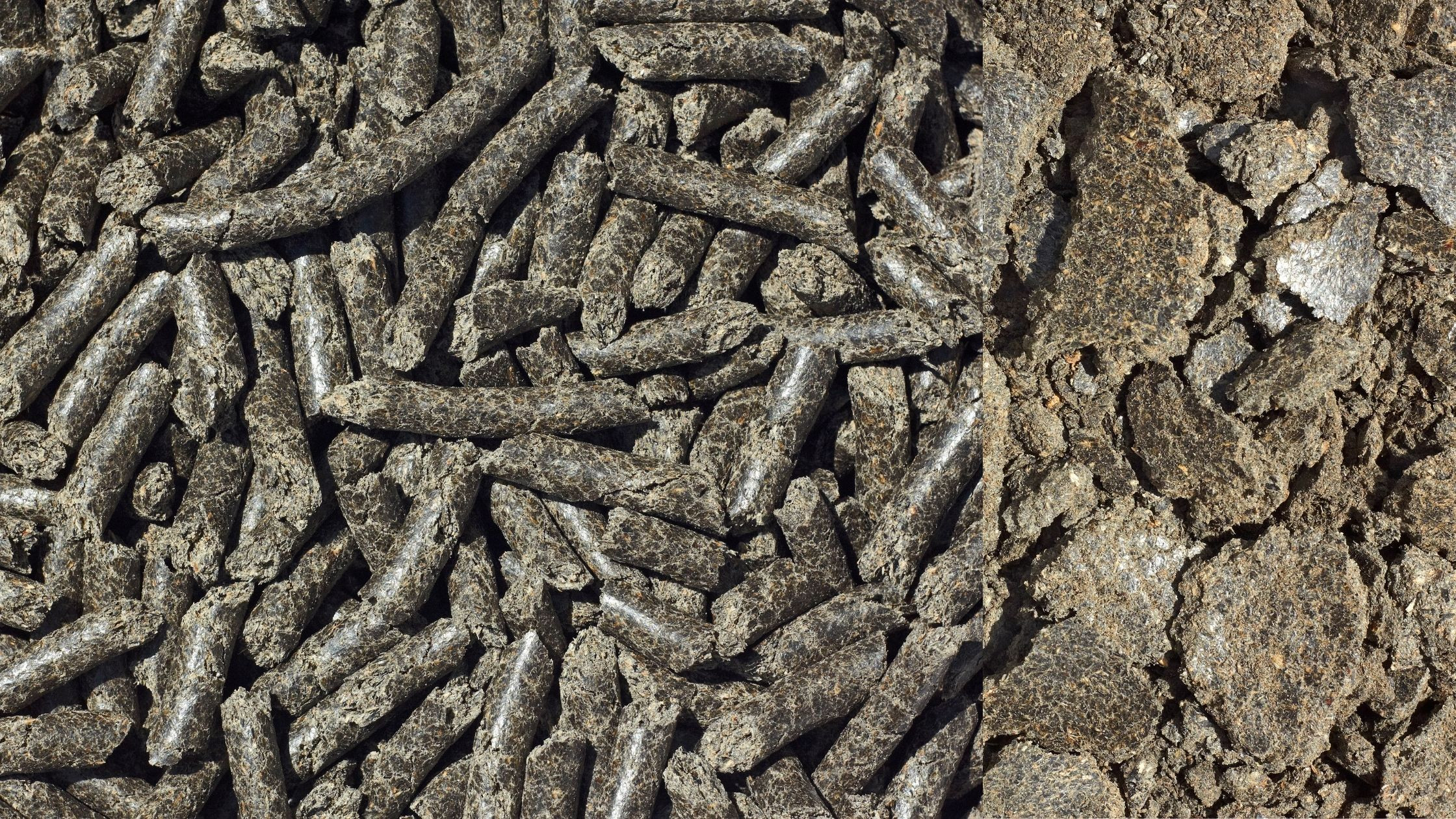
Measure the delivered material before testing its resistance to breakage
Delivery fines describe the proportion of the sampled consignment passing a stated sieve at a named point. The result should represent the material as sampled, including the fines already present. A durability test instead subjects a prepared pellet sample to defined mechanical stress and measures the retained pellet fraction afterward.
Kansas State University’s pellet-quality guidance describes removing existing fines before the tumbling durability test. That preparation matters: an index calculated from screened pellets cannot also be read as the original percentage of whole pellets in the delivery.
Reference: Kansas State University: Evaluating Pellet Quality
Keep the two denominators visible
Consider an illustrative receipt sample weighing 1,000 g. If 60 g passes the contract sieve, its measured fines content is 6.0%. Suppose a separate 500 g portion of screened pellets retains 480 g after the agreed durability test: that test reports 96.0% durability. Both figures can be correct for the same material.
The 96.0% result does not erase the 6.0% already observed. Nor can the two percentages simply be added, subtracted or converted into a prediction of arrival fines. The durability result concerns a prepared test portion; the receipt result concerns the sampled delivery. These example figures are calculations, not recommended sunflower-meal acceptance limits.
| Record | Calculation in this example | What the result describes |
|---|---|---|
| Receipt fines | 60 ÷ 1,000 × 100 = 6.0% | Fines present at the named sampling point |
| Durability test | 480 ÷ 500 × 100 = 96.0% | Screened pellets retained after the specified test |
A method name is part of the result
Standard tumbling, modified tumbling and air-agitation tests should not be treated as interchangeable labels. Kansas State’s current laboratory catalogue lists these as separate services and offers several air-agitation durations. A result without the apparatus and procedure leaves the comparison incomplete.
Before comparing suppliers, request the procedure and revision, test duration, starting mass, preparation sieve, pellet diameter, sample condition and any modification. Have the testing laboratory confirm suitability for the actual sunflower-meal pellets. Do not transfer a target developed for a finished compound feed to a single feed ingredient without agreement.
Reference: Kansas State University: pellet durability testing services
Define the handover before resolving a difference
A sample taken before loading and one collected after a receiver’s conveyor do not describe the same handling boundary. For a trial shipment, agree where dispatch and receipt samples will be taken, who will collect them, how increments will cover the lot, and how retained samples will be sealed and identified.
Record material changes between those points: bulk or bagged transport, loading and unloading equipment, intermediate transfers, and any screening or removal of fines. This is a practical investigation plan, not a promise that a laboratory index predicts every route. A large difference should trigger a review of both sampling comparability and the actual handling history.
Contract two criteria and one review process
Keep the maximum delivery fines, named sieve and acceptance location in one clause. Put any minimum durability, complete procedure and testing responsibility in another. State how a disputed result will be investigated, which retained sample or independent laboratory may be used, and who can decide the disposition of the lot.
Pellet appearance and physical strength do not establish nutrient composition or feed safety. The underlying sunflower-meal identity, protein, fibre, moisture and any processing aids still need their own agreed evidence. Avoid accepting a physical test as a substitute for those controls.
Send the receiving conditions with the product request
For a useful enquiry, provide the required sunflower-meal specification, pellet dimensions, quantity, destination, packaging, receiving equipment and both proposed physical acceptance criteria. Include an existing laboratory method if the mill already uses one.
Zenith Eclipse lists pelleted sunflower meal among its supply options. The offered lot, final specification, tests and delivery scope require written confirmation; this article does not state current stock or a standard durability guarantee.
Discuss your requirements
Discuss a sunflower meal pellet requirement
Send the intended use, composition limits, pellet and fines criteria, quantity and destination to the products team.