
Zenith Eclipse Journal / 07
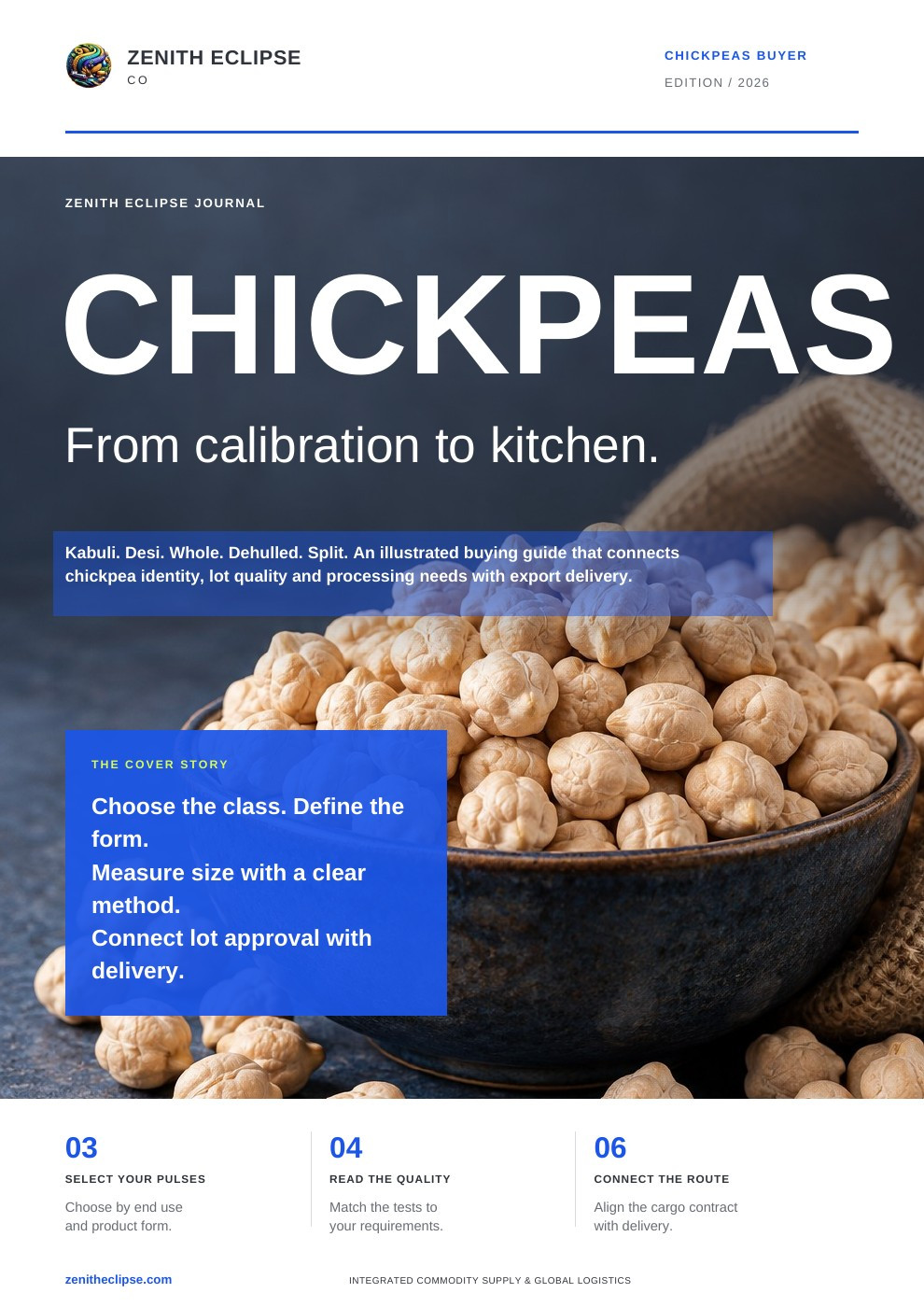
Chickpeas.
From calibration
to kitchen.
The right class. A defined calibration. A connected delivery plan.
An illustrated guide for packers, canners, hummus and food manufacturers, dal and flour processors, wholesalers and importers.
· 8 pages · English
Inside this edition
Better chickpeas buying
begins with the details.
Choose class, calibration and supplied form around the product your operation wants to make.
Begin with the product you want to make.
A hummus producer, dal mill and retail packer ask different questions. A useful chickpea enquiry starts with the finished application.
03Class. Calibration. Processing form.
Kabuli and Desi are classes. Size and presentation are separate decisions; define all three when requesting an offer.
04Measure the lot. Test the application.
Use a representative sample and clear methods. Physical grade, size distribution and processing approval answer different questions.
05Protect calibration through every handoff.
Match the pack to the supplied chickpea form, receiving equipment and onward processing.
06Keep the lot and the route connected.
Align the chickpea description, sample approval and cargo documents with the delivery plan.
07–08Build your enquiry
Give your purchasing, quality and logistics teams the same eight details before comparing offers. Connect with our sales and logistics teams.
Your digital edition
Turn the page.
Use the reader controls to browse all 8 pages. You can also open the reader in a new tab or download the PDF.
From insight to enquiry
Explore chickpeas supply.
Then connect the route.
Share the Kabuli or Desi class, supplied form, calibration method, quality brief, quantity, destination and shipment window. Our team will review your requirements and confirm the applicable commercial scope.
Availability, quality limits, pricing, packing and shipment terms are confirmed in the written offer and contract. Magazine imagery is illustrative.
View all magazines